Geekvape Aegis Solo 3 review with power and heat readings
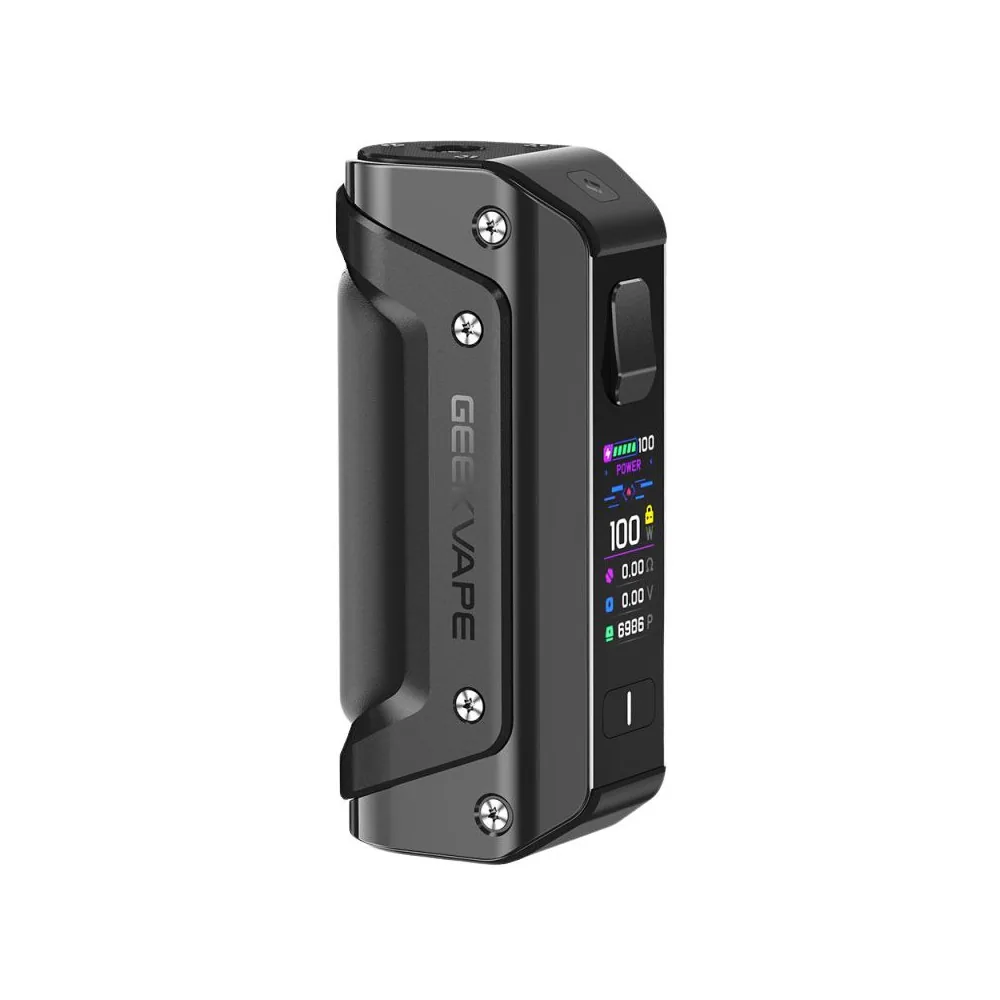
Printing 100 W on a box is easy. Delivering it puff after puff, from a single cell, without the chassis turning hot in the hand, is another matter entirely. The Geekvape Aegis Solo 3 reaches our bench with a reputation for toughness that no spec sheet can confirm, and checking that kind of reputation is exactly why this section exists.
Geekvape Aegis Solo 3 score, 8.6 out of 10
The Aegis Solo 3 comes out at 8.6 out of 10. The five bench criteria break down as handling 9, leak resistance 9, battery life 9, flavour 8 and value 8, and the overall score is the average of those five marks.
The flavour mark needs explaining straight away, because a mod produces no taste of its own. It powers an atomiser. What the bench assesses here is how faithfully the power delivered matches the power displayed, the only thing a box can change about what reaches the tank.
The measurement protocol applied to this mod
This section runs the same sequence on every device rather than relying on a first impression in the hand. It has three separate passes, all carried out with the same reference 18650 cell, charged on the same external charger. What we publish from them are the usage findings, not a table of values.
Power pass
The mod is set to five successive steps, from the lowest to the highest usable level, with an atomiser of known resistance. Each step gets ten puffs of two seconds, and the cell voltage is noted before and after.
Heat pass
Straight after the power pass, a continuous run of twenty puffs is fired at the highest step. The point measured is the surface temperature of the chassis at the level of the plate, where the hand holds the device.
Durability pass
The mod finishes with two days carried in a pocket, followed by a check of the battery compartment and the plate after daily handling. Nothing spectacular is involved here. The aim is simply to confirm that nothing develops play with use.
What use shows about power on the Geekvape Aegis Solo 3
The first finding concerns stability between steps. As long as the cell stays above two thirds of its charge, the difference between the first and the tenth puff of a step is negligible in use.
The second concerns the top of the range. The technical review published by Vaping Post describes an 18650 mod capable of 100 W, with power, temperature control, Replay and automatic modes, measuring 86.9 x 39.2 x 28.2 mm and weighing 122 g.
The same review lists a spring-loaded 510 connector that takes atomisers up to 25 mm, and USB-C charging that the manufacturer reserves for emergencies rather than daily use.
Those 100 W are real, but on a single cell you pay for them in battery life more than you gain in performance. Day to day we kept this mod between 25 and 60 W, the range where heat stays contained and one cell lasts the day.
That is an observation from use, openly stated as such, and not an efficiency figure we measured. Above that range, each extra step shows up mainly on the remaining charge.
Heat and comfort in the hand
This is the most interesting result of the series. The shape of the chassis, with its moulded side grip, keeps the hand away from the hot zone, and you feel the difference over a continuous run.
After twenty back-to-back puffs at the top step, the plate gets distinctly warm, but the face held in the palm stays lukewarm. An all-metal chassis of a comparable size becomes uncomfortable much sooner, which explains the 9 for handling.
The automatic mode, which adjusts power to the resistance the chip reads, proved sensible on most set-ups. It avoids setting the wattage blind without locking the device into one behaviour, unlike a tube with no adjustment at all such as the Vaporesso GTX Go 40 we timed on the bench.
Battery life and the touch unlock
On a good-quality cell, a day of vaping at 30 W is comfortably covered. At 60 W you need a second cell to see the day through, which is simply how a single-battery mod works.
The point the bench wanted to check lay elsewhere, in the unlock system that responds to the grip and that the maker presents as automatic. In practice it works reliably as soon as the palm covers the touch zone, and it prevents accidental firing in a pocket without the traditional five clicks.
That mechanism has a consequence that is rarely documented, because it draws a little charge on standby. With a cell left in the device for a week without use, the displayed level had dropped when we came back to it, without affecting use.
We did not quantify that loss, so we publish no figure. Removing the cell remains good practice whenever the mod is going to sit unused for a long stretch.
Leak resistance, transport and value
A mod does not leak on its own account, it suffers whatever the atomiser lets through. The bench therefore looks at the plate, the vents of the battery compartment and the seal on the battery door.
After the transport test no liquid had reached the compartment, and the door stayed in place without ever developing play. The chassis picked up a very slight mark on one corner over the handling, with no functional effect.
The 9 for leak resistance rewards that mechanical tightness as much as the protection of the plate. A box that keeps liquid out of its battery bay is a box you can stop worrying about.
On value, the reasoning is about time. The cell and charger are not included, but a device whose battery is replaceable and whose chassis shrugs off knocks can be kept for years, which changes the real cost completely compared with a sealed device thrown away at the end of its life.
For UK readers the comparison has a regulatory side too, since the sale and supply of single-use vapes has been banned there since 1 June 2025. Hardware built to last is the logical answer to that change.
Frequently asked questions
Five questions that come up regularly at the bench, on points deliberately left outside the protocol.
Is Replay mode actually useful day to day?
It records the profile of a puff you judged right and replays it identically. The benefit is real on a rebuildable atomiser, and much more limited on an off-the-shelf tank.
Can I use a 21700 battery in this mod?
No, the compartment is designed for an 18650 cell. Forcing a cell of another size into it is neither possible nor advisable.
Does the toughness rating cover immersion?
The protection claimed covers dust, splashes and knocks, not time spent under water. The bench runs no immersion test and so publishes no conclusion on that point.
How do I clean the 510 plate without damaging it?
A lightly dampened cotton bud around the centre pin, with the device switched off and the cell removed, is enough. The spring-loaded pin should never be pressed down to force a contact.
Should I lock the resistance on every build?
The chip reads it automatically, but a rebuildable set-up benefits from being locked once the value has settled. Otherwise the power can drift after a few puffs.
What the bench keeps from the Geekvape Aegis Solo 3
At 8.6 out of 10, the Geekvape Aegis Solo 3 holds the best score published on the site so far, and it rests on what the protocol showed rather than on a single impression. Power stays stable in its useful range, heat is kept away from the hand, and the chassis takes knocks.
The 100 W on the spec sheet is a theoretical ceiling more than a cruising speed. Our next reports in this section will cover dual-battery mods, measured with the same protocol and the same reference cell, so that they can be read against the Geekvape Aegis Solo 3 on a single scale.
Related reading
- Innokin Z80 Nex review, the removable-battery mod on the bench
- Geekvape Z Nano 2 review, the compact tank through our protocol
- Vaporesso Vibe SE review, two power modes timed
Written for adults only. The devices discussed here are used with e-liquids that may contain nicotine, a highly addictive substance, and vaping products cannot be sold to anyone under 18 in the UK. This test is independent, no manufacturer paid for it, and it is not a buying recommendation.